
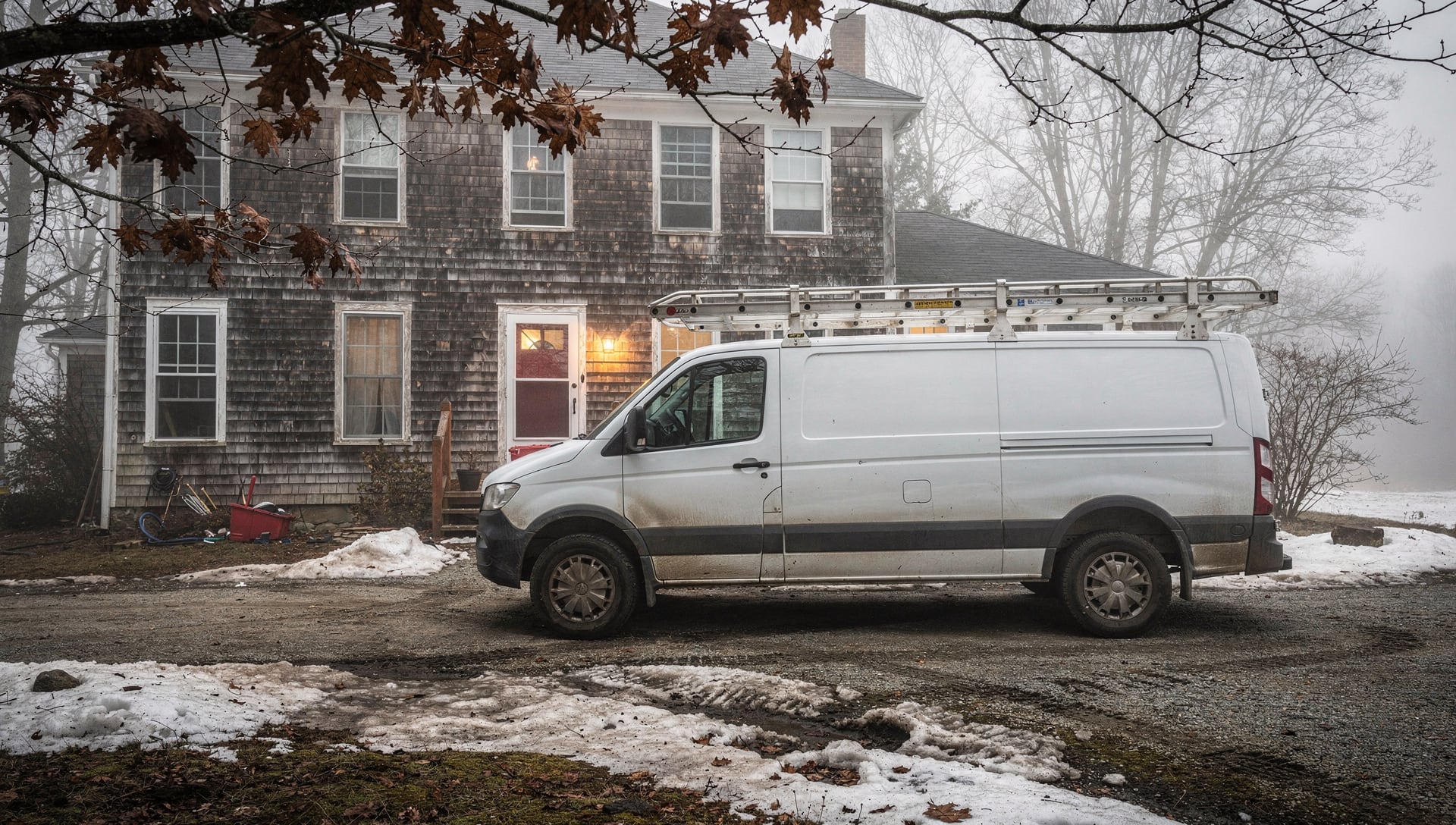
New Hampshire does not license general contractors at the state level. There is no single number to look up the way Massachusetts has for its Home Improvement Contractors. That does not leave you exposed, it just means verification is four checks instead of one: the licensed trades on the job, the insurance, the business standing, and the reviews. Below is the exact walkthrough, and it takes about 15 minutes.
Step 1: Get the contractor's full legal business name
Ask for the LLC or corporation name as it appears on their contract, not just the trade name on their truck. Anjo Services, LLC is the legal name. A vague trade name with no LLC behind it is the first thing to question.
Step 2: Verify the licensed trades on the NH OPLC lookup
New Hampshire licenses electricians and plumbers through the Office of Professional Licensure and Certification (OPLC). Any electrical or plumbing on your project must be done or supervised by a licensed tradesperson. Ask the contractor who is doing the electrical and the plumbing, then look those individuals or companies up on the OPLC license lookup. The result shows:
- License type (electrician, plumber, gasfitter, etc.)
- Status (active, expired, lapsed)
- Expiration or renewal date
- Any disciplinary action on record
If the trade license is anything other than active, do not let that person touch the wiring or the pipes on your job. This is the closest thing New Hampshire has to a contractor lookup, and it covers the two trades most likely to burn or flood your house if done wrong.
Step 3: Get a Certificate of Insurance directly from the carrier
Because there is no state contractor license backing you up in New Hampshire, insurance is your single most important check. Ask the contractor's insurance agent to email you a current Certificate of Insurance (COI) directly. It should show general liability of at least $1,000,000 and workers compensation coverage for anyone on the crew.
Do not accept a photocopy from the truck. Policies lapse. The only COI you can trust is one the carrier sends you, dated recently, with your project on it.
Step 4: Confirm the business is registered and cross-reference the contract
A real company is registered as an LLC or corporation with the New Hampshire Secretary of State. You can search the business name there and confirm it is in good standing. Then take that legal name and confirm it matches the name printed on the contract and on the COI. People sometimes hide a lapsed insurance policy or a bad track record behind a similar-but-not-identical company name.
Step 5: Check the BBB and Google reviews
The license and insurance checks tell you whether the contractor is legitimate. The BBB and Google tell you whether the work is good. Search the contractor's name on bbb.org and read the complaints section if any. Search Google for the contractor's name plus 'reviews' and read the most recent 10 to 15. Look for patterns: do multiple homeowners mention the same problem?
One bad review on a 30-review profile is normal. Three reviews mentioning the same issue (showed up late, did not finish punch list, charged for materials he did not use) is a pattern. Patterns repeat. Treat them as forecasts, not as anomalies.
Pay particular attention to how the contractor responded to negative reviews, when they did. A contractor who answers a one-star review with the homeowner's perspective and a path to resolution is showing you how they handle hard moments. A contractor who does not respond, or who responds defensively, is showing you something different.
What to do if the contractor cannot verify
Walk away. Tell them why. A contractor who cannot produce a current COI, or whose named electrician is not on the OPLC lookup, or whose business is not registered, is a contractor you cannot stand behind. If the work goes bad, your protection in New Hampshire is the written contract, the insurance, and, if it comes to it, the Consumer Protection Act (RSA 358-A) and small claims court. All of those get much weaker when the contractor was never verifiable in the first place.
If a contractor pushes deceptive or unfair tactics, New Hampshire's Consumer Protection Act (RSA 358-A) gives you a path through the Attorney General's Consumer Protection Bureau. Document everything.
What about contractors based in Massachusetts?
Massachusetts requires a Home Improvement Contractor (HIC) registration for residential work over $1,000 in that state. A Massachusetts contractor working on your New Hampshire home does not need that MA registration for the NH job, because it attaches to Massachusetts work. What matters on your NH project is insurance and the NH-licensed trades, same as any other contractor.
It runs the other way too. If your project is across the line in Methuen, Lawrence, or Haverhill, then Massachusetts HIC rules apply and you should verify that registration. Anjo holds both a Massachusetts HIC and CSL and works freely on both sides of the state line, so we bring the right paperwork for whichever side your project sits on.
What to ask the inspector
If you are still unsure after the OPLC and insurance checks, call the building department in your town. The inspector knows which contractors pull permits regularly and which ones routinely do work without permits. The Salem, Windham, Nashua, and Derry inspectors all answer their phones and will tell you straight if a contractor has a track record of skipping the permit process.
What to do next
Read our 7 questions to ask before hiring a contractor in New Hampshire and what should be in a New Hampshire home improvement contract. When you are ready for a walkthrough, book a time.
“Verifying a license takes about two minutes. Skipping it can cost you the whole job.”
Tony Squillini, Owner, Anjo Services, LLC
Next step
Ready to talk about your project?
Take the 6 question quiz to find your project, or schedule a free walkthrough. Tony does the walkthrough himself. Written quote, line by line.